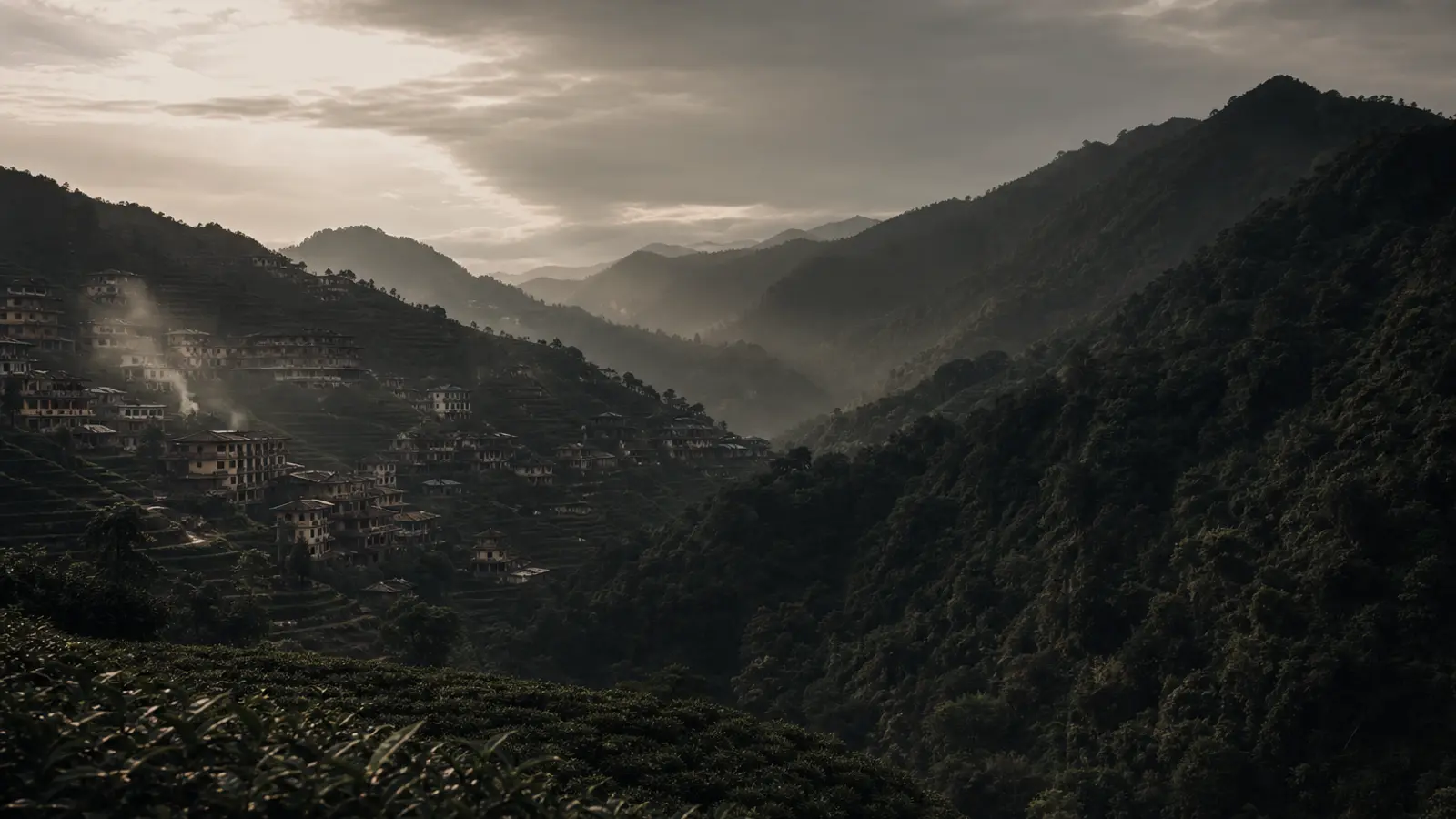
Every pu-erh tea on earth traces its origin to Yunnan province in southwestern China. This is not a matter of tradition or marketing — it is a matter of biology and geography. The ancient tea trees (Camellia sinensis var. assamica) whose leaves become pu-erh grow naturally in Yunnan’s subtropical mountains, where the species evolved over millions of years in the forests that straddle the border between the Tibetan Plateau and the lowlands of mainland Southeast Asia. Pu-erh from Yunnan is not a regional specialty the way Champagne is a regional wine. It is the origin. The plant is from here.
But Yunnan is not one terroir. It is dozens. The province spans 394,000 square kilometers — larger than Germany — and its tea mountains cover three prefectures with distinct geologies, elevations, climates, and resulting flavors. A sheng pu-erh from Yiwu and a sheng pu-erh from Laobanzhang — both Yunnan, both var. assamica, both processed as raw cakes — taste as different from each other as a Margaux tastes from a Pauillac. The mountain wrote the tea. Understanding which mountain means understanding what’s in your cup.
This page maps the major Yunnan tea mountains. Each links to a dedicated origin profile with full terroir detail. Together, they form the map that makes pu-erh’s diversity legible.

The Three Prefectures
Yunnan’s pu-erh production concentrates in three prefectures, each with distinct character.
Xishuangbanna (西双版纳)
The historical heart of pu-erh. Xishuangbanna sits at the southern tip of Yunnan, bordering Laos and Myanmar. The famous Six Ancient Tea Mountains (六大茶山) — the origins named in Qing Dynasty records as the source of imperial tribute tea — are all here. The climate is tropical monsoon: warm year-round, heavy rainfall during the wet season, high humidity. The ancient tea forests grow at 1,200–1,800 meters in mixed biodiversity environments where tea trees share the canopy with tropical hardwoods.
Xishuangbanna produces the most famous and most expensive pu-erh on earth. The terroir character tends toward elegance, sweetness, and aromatic complexity — the softer, more refined end of the pu-erh spectrum.
Mountains in Xishuangbanna:
- Yiwu (易武) — Peach, honey, silk. The Grand Cru of pu-erh. The most prized and collected origin, where sweetness leads and bitterness provides architecture. Yiwu’s aged sheng develops camphor and dried fruit complexity that no other origin replicates at the same quality level.
- Laobanzhang (老班章) — Power, explosive huigan, hardwood incense. The Barolo. The most expensive fresh maocha in Yunnan, where extreme bitterness converts dramatically into flooding sweetness. Laobanzhang is the tea that proves bitterness is not a flaw — it is a reservoir of future sweetness.
- Bulang Mountain (布朗山) — Muscular structure, bitter backbone, dense body. The broader mountain range that includes Laobanzhang’s village. Bulang teas share the structural intensity but each village — Lao Man’e, Ban Pen, He Kai — expresses it differently.
- Nannuo Mountain (南糯山) — Balanced, accessible, sweet with moderate bitterness. The “village Burgundy” of pu-erh — genuine terroir expression at accessible prices. Home to the famous 800-year King of Tea Trees.
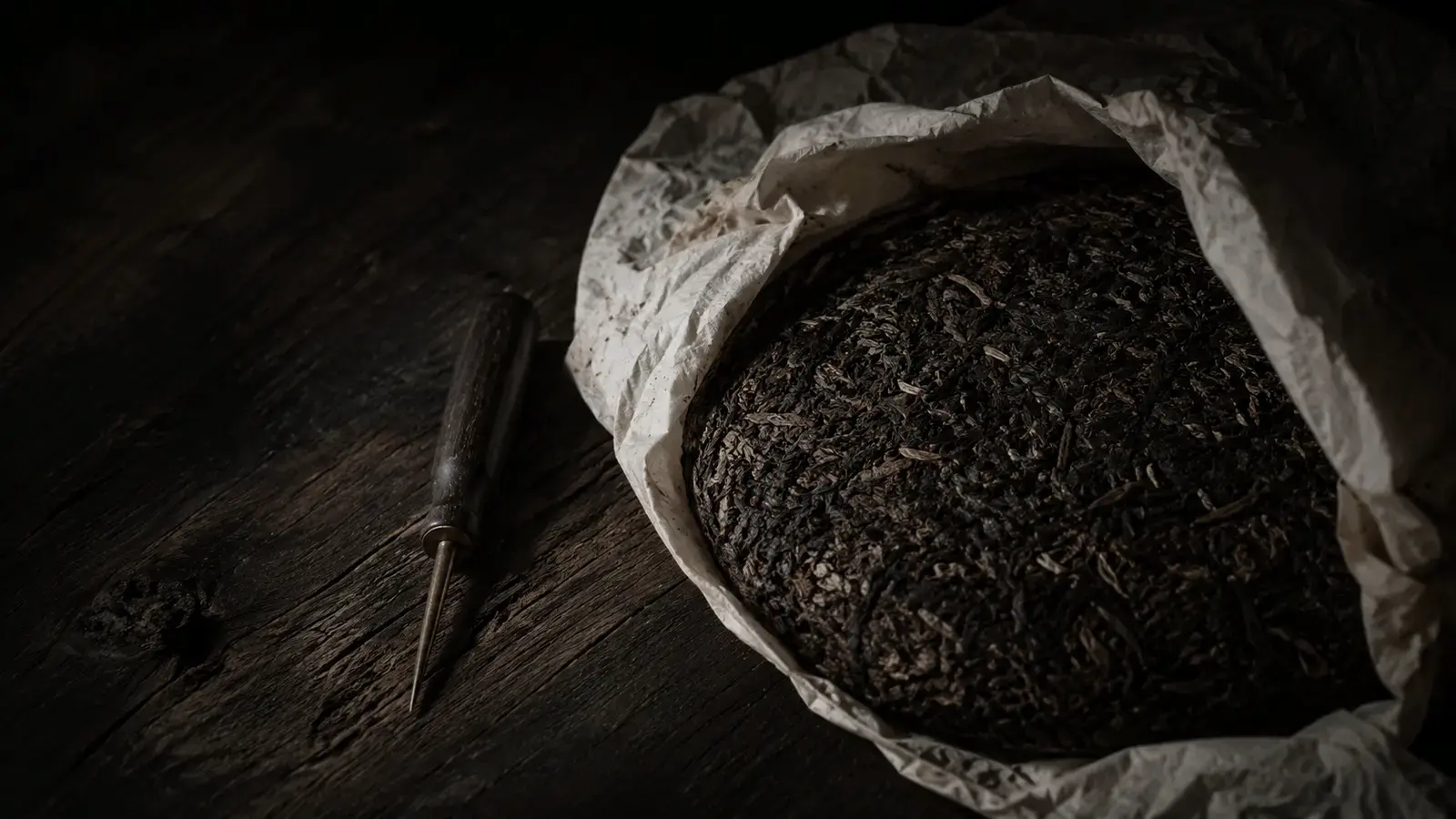
- Menghai County (勐海县) — The administrative and commercial center of Xishuangbanna pu-erh production. Home to the Menghai Tea Factory (established 1940), which developed and popularized shou pu-erh in the 1970s and whose factory productions (7542, 7572, 8582) define the benchmarks that all other pu-erh is measured against.
Pu’er Prefecture (普洱市, formerly Simao)
The prefecture that gave pu-erh its name — though, confusingly, it was historically a trading hub rather than a primary production area. The ancient Tea Horse Road (茶马古道) passed through Pu’er city, where tea from surrounding mountains was compressed and shipped to Tibet, Southeast Asia, and beyond. Today, Pu’er prefecture produces significant volumes with a character that tends toward the middle of the spectrum — less extreme than Xishuangbanna’s peaks but with dependable quality.
Mountains in Pu’er Prefecture:
- Jingmai Mountain (景迈山) — Floral, perfumed, sweet. Jingmai’s ancient tea gardens are among the oldest continuously cultivated tea forests in the world, designated a UNESCO World Heritage Site in 2023. The floral intensity — orchid, honey, sometimes rose — makes Jingmai immediately identifiable. The most aromatic pu-erh origin.
Lincang (临沧)
The northern production region, producing pu-erh with a harder, more mineral-driven character than Xishuangbanna. Lincang teas tend toward stone-over-wood — less elegant sweetness, more structural backbone. The region is increasingly recognized for high-quality ancient tree material at prices below the Xishuangbanna peaks.
Mountains in Lincang:
- Xigui (昔归) — Rock-sugar sweetness and mineral intensity from an unusually low elevation (900m). Proof that terroir is not reducible to altitude alone. Xigui produces some of Lincang’s most distinctive and expensive sheng.
- Baiyingshan (白莺山) — White Oriole Mountain. Ancient tea gardens in Yunxian County with remarkable cultivar diversity — over a dozen distinct tea tree varieties grow in a single forest. A quieter, less commercially hyped Lincang origin with developing recognition.
- Big Snow Mountain (大雪山, Mengku) — Mineral bitterness with hints of stone fruit. The hardest edge of the three major Yunnan terroir families. The mountain harbors some of the oldest wild tea trees ever discovered, with specimens dated at several thousand years near the summit.
The Terroir Table
| Mountain | Prefecture | Elevation | Character | Wine Parallel | Price Tier |
|---|---|---|---|---|---|
| Yiwu | Xishuangbanna | 1,200–1,600m | Peach, honey, silk, elegance | Grand Cru Burgundy | Premium |
| Laobanzhang | Xishuangbanna | 1,600–1,900m | Power, explosive huigan, hardwood | Barolo | Ultra-premium |
| Bulang | Xishuangbanna | 1,300–1,800m | Muscular, bitter backbone, dense | Hermitage | Mid-premium |
| Nannuo | Xishuangbanna | 1,400–1,800m | Balanced, sweet, accessible | Village Burgundy | Accessible |
| Jingmai | Pu’er | 1,100–1,500m | Floral, perfumed, honey, orchid | Condrieu | Mid-premium |
| Xigui | Lincang | ~900m | Rock-sugar, mineral, intense | Priorat | Premium |
| Baiyingshan | Lincang | 1,800–2,200m | Diverse cultivars, developing | — | Mid-range |
| Big Snow Mountain | Lincang | 1,800–1,900m | Mineral bitterness, stone fruit hints | Northern Rhone | Mid-range |
What the Map Means for Drinkers
If you’re beginning to explore pu-erh terroir, the map above is your starting compass. A few navigation principles:
Start with Nannuo or Jingmai if you want approachable pu-erh that shows what terroir expression means without demanding a high tolerance for bitterness. Both are sweet, complex, and available at reasonable prices.
Move to Yiwu when you want elegance. Yiwu’s peach-honey-silk profile is the reference point for what aged sheng can become at its most refined. Every other terroir is partly defined in contrast to Yiwu.
Confront Laobanzhang or Bulang when you’re ready for power. The bitterness is a feature, not a defect. The kugan (苦甘, bitter-sweet) conversion — where extreme bitterness transforms into flooding sweetness in the huigan — is the defining experience of Bulang mountain pu-erh.
Explore Lincang when you want to understand how the same species in different geology produces radically different tea. The mineral-forward, stone-over-wood character of Lincang contrasts sharply with Xishuangbanna’s softer elegance.
The pu-erh guide covers the category from first principles. Sheng vs shou explains the processing fork. The terroir guide explains why origin matters across all tea types, not just pu-erh. And the gongfu brewing method covers how to extract the best from these mountain teas.
The Ancient Tree Question
Most premium pu-erh marketed internationally claims ancient tree (gushu, 古树) or old tree (lao shu, 老树) material — trees measured in centuries rather than decades. The premium is enormous: gushu maocha from Laobanzhang costs 10–50x what plantation material from the same village costs.
The question of whether the premium is justified is genuinely contested. Ancient tree advocates argue that deep root systems access different soil minerals, producing measurably more complex and body-affecting tea. Skeptics argue that the difference is smaller than marketing suggests and that plantation material from the same mountain can be excellent.
The honest position: ancient tree material from verified sources in the mountains listed above does produce tea with more concentration, more body, and more cha qi than plantation material from the same area. The difference is real but the magnitude varies — and the counterfeiting problem is severe. Most “ancient tree” pu-erh sold online at consumer prices is not from ancient trees. Trusted sourcing, verified provenance, and your own palate are the only reliable guides.