Illustration
Who Writes This
My name is J. I live between Southeast Asia and Korea, have four kids, and manage anxiety.
I say that plainly because it matters for understanding why this site exists.
Seventeen years ago, on a mountainside in Taiwan, I sat in an open-air teahouse with an old high school friend and drank high mountain oolong for four hours. Same leaves, a dozen steeps, the liquor changing from bright and floral to something deeper and almost sweet. Life happened after that — work, family, years where tea was background noise instead of a practice. In 2026, I came back to tea. Deliberately this time.
I came to it through wine. Not casual wine — the deep end. Terroir, vintage, varietal, the kind of drinking where you care which slope the grapes grew on and what the winemaker did differently in 2015 versus 2016. Wine was the intellectual architecture: the collector's framework, the sensory training, the ritual that gave evenings a shape.
When a health protocol forced me to stop drinking, the loss wasn't the alcohol. It was the architecture.
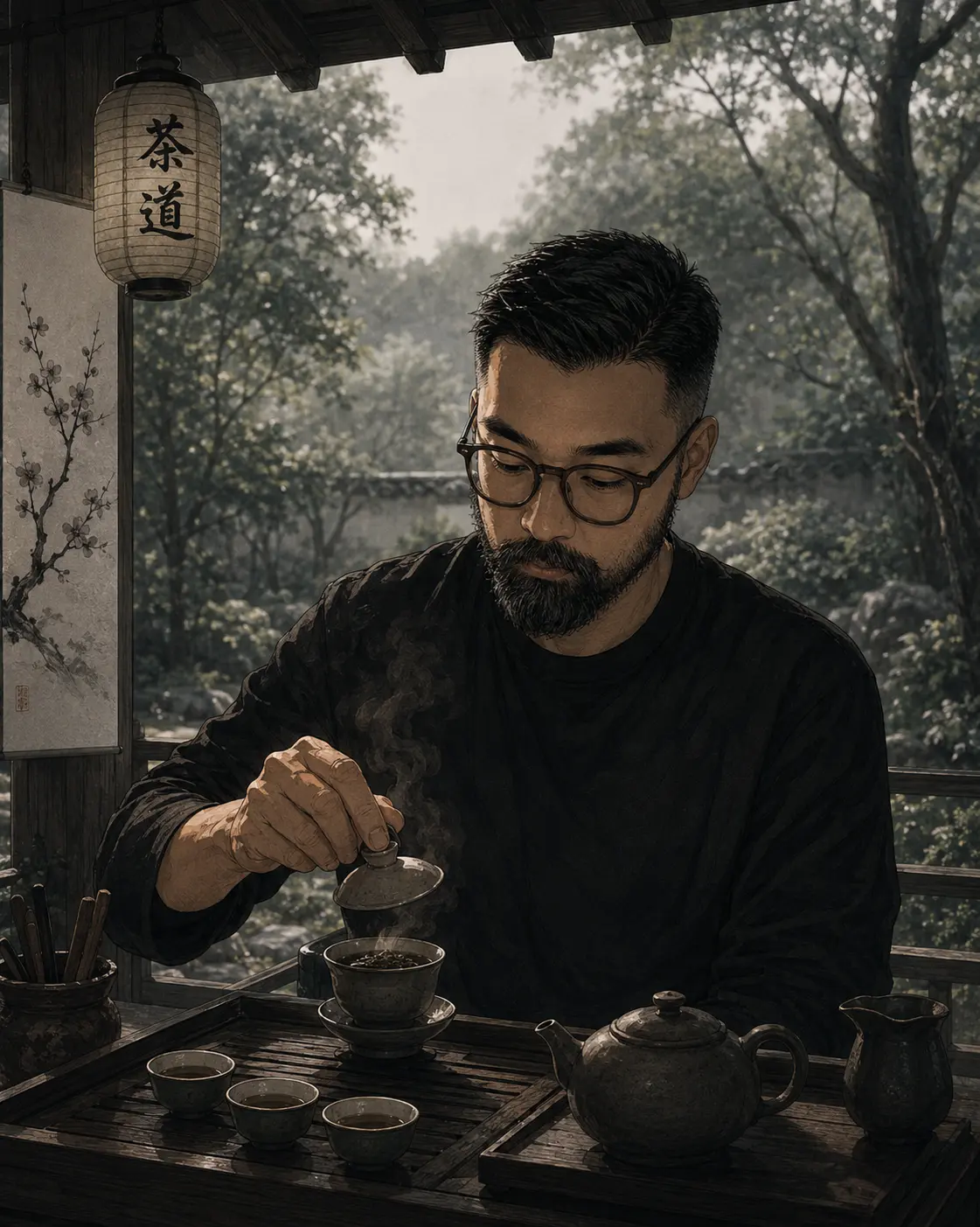
Gongfu-brewed Chinese tea turned out to be the rebuild. The parallels are real, not forced: terroir drives character, processing is craft, aging transforms, and the palate development curve rewards the same systematic attention that made wine study compelling. I came for the intellectual framework. I stayed because the practice itself — the small vessel, the measured leaf, the counted seconds — turned out to be the most reliable grounding tool I've found for a brain that doesn't stop on its own.
I have panic disorder. I'm not going to be vague about it or dress it in euphemisms. The daily gongfu session is not a cure and I'm not suggesting it as one. But the act of measuring 7 grams of leaf, heating water to exactly 95 degrees, timing 10-second steeps, evaluating flavor across ten dimensions, and writing it down — that sequence is structurally incompatible with the rumination loop that anxiety produces. You cannot spiral while you're counting a steep.
The journaling started with tea notes. It became the first consistent writing practice of my life. The tea table became the first place in my day where my attention is fully in one place. That's not a wellness claim. It's an observation, documented over months of daily practice.
Steep Atlas exists because I couldn't find what I needed when I came back to tea. The tea internet was split between academic depth nobody reads, vendor marketing disguised as education, and hobby blogs recycling beginner content. No single resource combined real sourcing knowledge, honest tasting documentation, and systematic exploration — written for adults who want depth without gatekeeping.
So I built one. And if you're reading this because you're looking for something to replace what you lost — whether that's wine, drinking, or just the evening ritual that used to hold your day together — the content here works for you too. Not because tea is medicine. Because the practice is genuinely absorbing, and absorbing is what some of us need.
The honest version of why I started: I have anxiety. I hid it for years. Wine was the evening ritual until the trade-off stopped working. Tea didn't fix me. But the hour I spend with it is the only hour where the noise stops. Not because tea is medicine. Because the ritual demands enough attention that there's no room left for the spiral.
I write about that part too. The Journal is where the protocol stops and the person starts.
The Korean Connection
I'm Korean. I grew up around Korean culture, Korean food, Korean aesthetics. When I started exploring teaware beyond the white porcelain gaiwan, Korean ceramics were the natural first step — celadon, buncheong, the entire tradition that shaped Japanese tea ceremony but gets almost no coverage in English.
That cultural familiarity is why Steep Atlas has the most comprehensive coverage of Korean tea and teaware anywhere outside Korea. We read Korean artisan portfolios in the original language, navigate Korean e-commerce platforms, and connect with Korean pottery studios directly. Explore the Korean section →
How the Content Is Built
Firsthand
Teas I have brewed in documented sessions. Teaware in daily practice. Vendors I have ordered from and received. Parameters, prices, and observations come from direct experience. When something is marked firsthand, the data is mine.
Research
Information sourced from published literature, credible producers, established researchers, or corroborated by multiple independent accounts. I have not verified it myself, but I have checked it against multiple sources.
Hypothesis
Pattern-based reasoning that has not been confirmed through direct experience or independent research. I have thought it through carefully and believe it is likely true, but I am not claiming it as established fact.
The Tasting Protocol
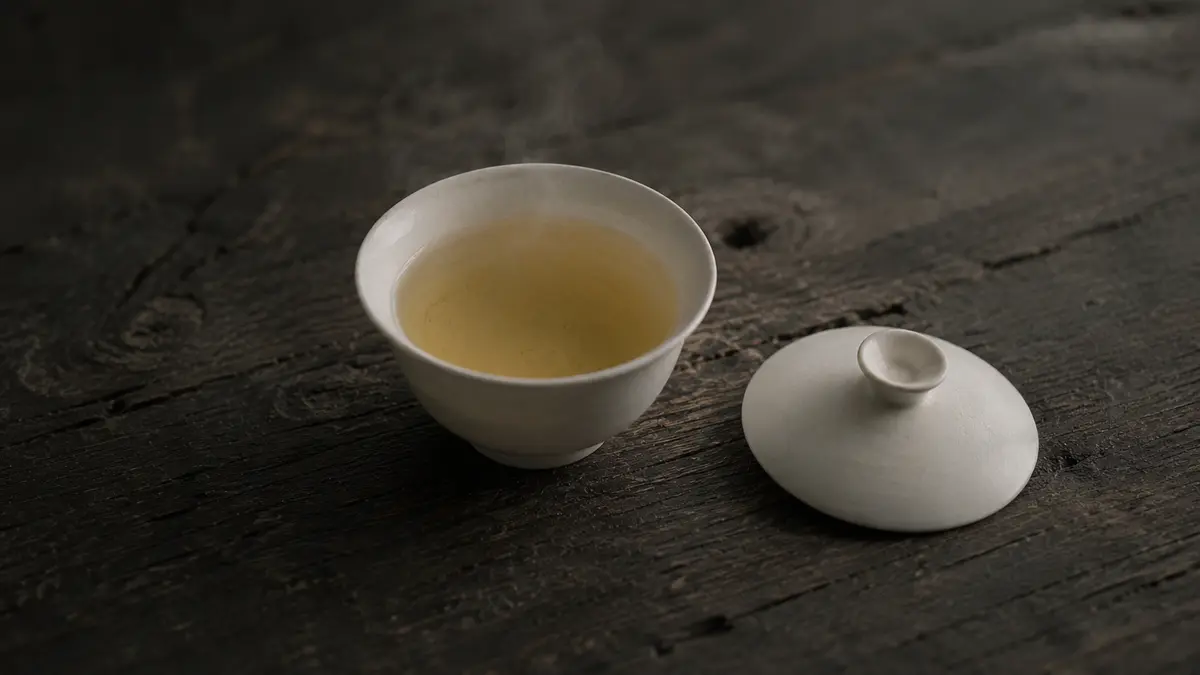
Every tasting note follows a standardized ten-dimension framework: dry leaf, wet leaf aroma, liquor color, cup aroma, flavor across three phases, mouthfeel, huigan, qi, steep progression, and value assessment. Same vessel — 100ml white porcelain gaiwan — measured leaf weight, controlled water temperature, timed steeps. Every session documented the same way so results are comparable across teas and over time.
Read the full methodology →Editorial Independence
Recommendations reflect honest evaluation, not commercial arrangements. When partnerships exist, they are disclosed. The tasting note says what the tea tastes like, not what someone paid me to say.
Questions, corrections, sourcing tips, or regional knowledge to share.
Get in Touch →