Steep Atlas covers a lot of ground — pu-erh, gongfu brewing, tasting notes, teaware, origin, storage. If you're here for the first time, the question is where to begin.
I'm New to Serious Tea
Six tea types, gongfu method, your first gaiwan.
CROSSOVERI'm Coming from Wine
Terroir, vintage, varietal. The framework transfers.
INTERMEDIATEI Want to Go Deeper
Sensory language, tasting protocol, huigan.
KOREANKorean Tea & Pottery
Celadon, buncheong, darye, and three tea regions.
ORIGINSWhere Tea Grows
Terroir profiles mapped like wine appellations.
TEAWARETools That Shape the Cup
Gaiwan, Yixing, Jian Shui, Korean celadon.
PERSONALI Stopped Drinking
The gap where the evening ritual used to be.
RAWI'm Here for the Raw Stuff
Anxiety. Panic. What the noise sounds like.
METAHow This Site Works
Evidence tiers, tasting protocol, editorial rules.
New to Serious Tea
You drink tea. Maybe daily. But you've started to sense there's a world beyond teabags and casual loose-leaf — and you want to understand it without wading through the same recycled beginner content.
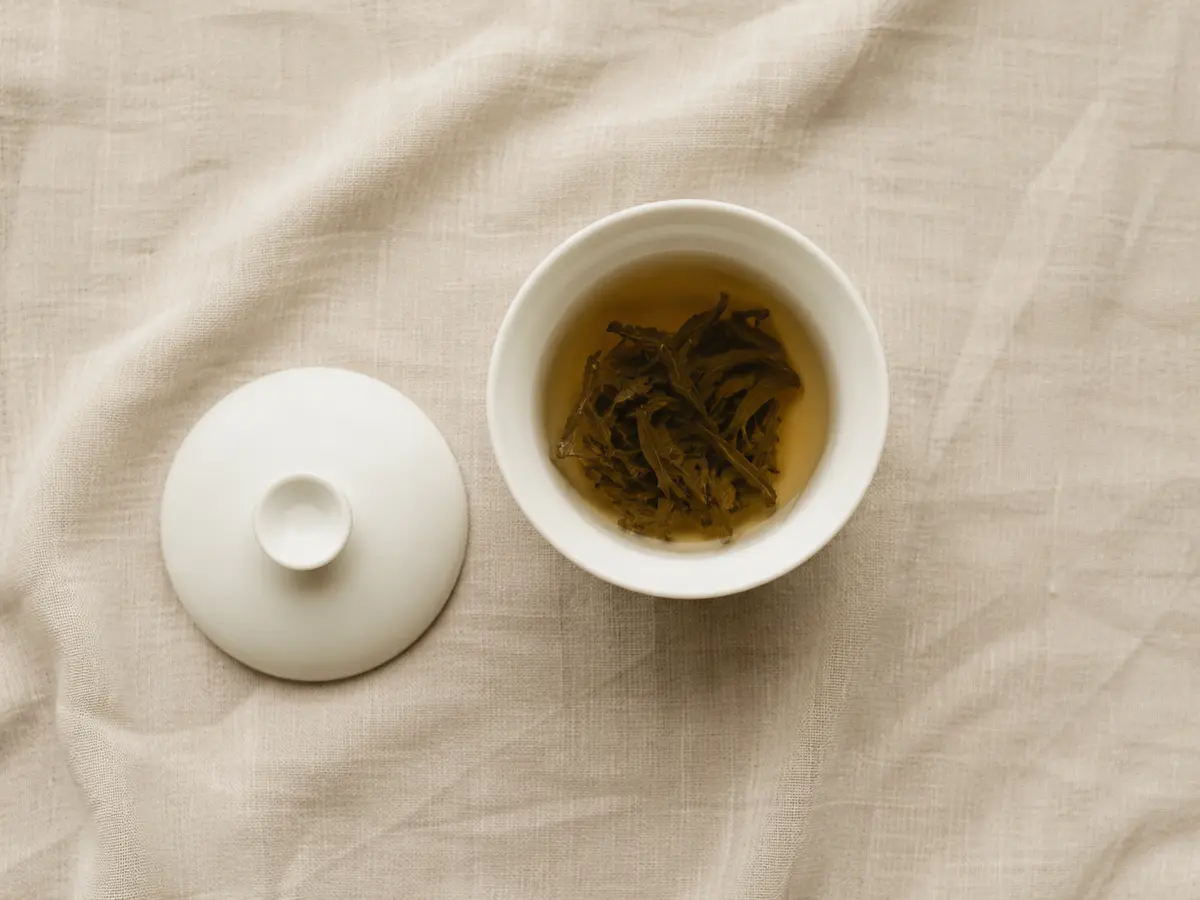
Here's the core of it: gongfu brewing (功夫泡) is a method of preparing tea using a small vessel, a high leaf-to-water ratio, and multiple short infusions. It extracts more complexity from the leaf than Western-style brewing, and it turns tea from a background beverage into a tasting session. Most of the content on Steep Atlas is built around this method.
Your reading path:
Start with The Complete Guide to Pu-erh Tea. Pu-erh is the tea category with the most depth — it ages, it has terroir, it has a collector market, and it rewards the kind of analytical attention that makes tea genuinely interesting. This guide covers the fundamentals: what pu-erh is, the difference between sheng (生, raw) and shou (熟, ripe), how it's processed, and what to look for when buying.
Then read Gongfu Brewing: The Complete Method. This is the practical foundation — water temperature, leaf weight, steep times, vessel selection. Specific parameters you can follow exactly. You'll produce better tea in your first session than years of Western-style brewing have given you.
From there, Sheng vs. Shou Pu-erh: The Differences Explained clarifies the two major pu-erh categories and helps you figure out which direction your palate prefers. They're different teas in almost every way that matters.
When you're ready to set up, Your First Gaiwan: A Buying Guide covers the one piece of equipment you actually need. A white porcelain gaiwan (蓋碗), 100ml capacity, widely available for under $15 USD. That's the starting point. Everything else is optional until you know what you want and why.
Key terms you'll encounter across the site:
Gaiwan (蓋碗) — a lidded bowl used for gongfu brewing. The standard vessel.
Huigan (回甘) — the returning sweetness that appears after swallowing tea. One of the most important quality indicators in Chinese tea.
Sheng (生) — raw pu-erh. Bright, bitter when young, transforms with age over years and decades.
Shou (熟) — ripe pu-erh. Processed through controlled fermentation to simulate aging. Smooth, earthy, accessible from day one.
Gongfu (功夫) — literally "skilled effort." In tea, it refers to the brewing method using small vessels and multiple short infusions.
Cha qi (茶氣) — the body sensation some teas produce. Warmth, alertness, calm. Noted on Steep Atlas when present, never fabricated.
Coming from Wine
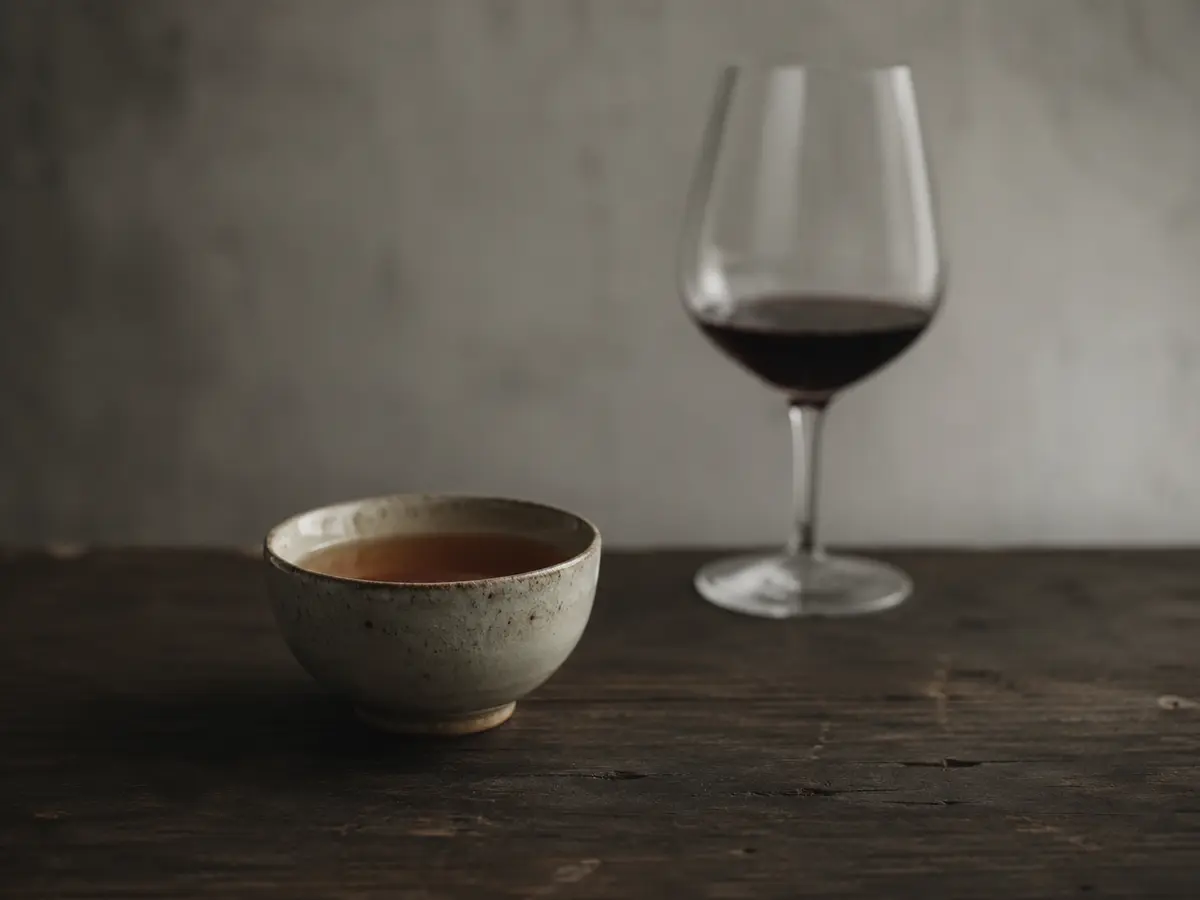
You think in terroir, vintage, and varietal. You care about who made it, where, and what they did differently this year versus last. You understand that a trained palate is built across hundreds of sessions, not downloaded from an article. You've found your way here because you want the same intellectual depth in a different liquid.
The framework transfers almost directly.
Your reading path:
Start with From Wine to Tea: A Framework for Palate Transfer. This maps the vocabulary — terroir to terroir, winemaker to tea master, cellar to pumidor, decanting to gongfu brewing. It also identifies where the parallels break down, because they do, and those gaps are where tea gets interesting on its own terms.
Then read The Complete Guide to Pu-erh Tea. Pu-erh is the wine drinker's entry point into serious tea. It has origin specificity — Laobanzhang versus Yiwu is like Pauillac versus Margaux, same region, dramatically different character. It ages over decades. Vintage matters. Storage conditions shape the final product the way cellar conditions shape wine. The collector market is real and the value curve has a sweet spot, just like Burgundy.
For terroir specifics, Thai Pu-erh vs. Yunnan Pu-erh: A Terroir Comparison is the kind of side-by-side origin evaluation that will feel immediately familiar — two regions, same tea type, fundamentally different profiles.
For the practical mechanics, Gongfu Brewing: The Complete Method is the equivalent of learning proper service and evaluation. Temperature, ratio, timing — specified to the degree and second.
Where the wine framework accelerates you:
Terroir evaluation. If you understand that the same grape produces different wine on different slopes, you already grasp why pu-erh from Laobanzhang and Yiwu taste nothing alike despite both being sheng pu-erh from Yunnan province. The vocabulary transfers; you just need the map.
Value assessment. The price curve in pu-erh mirrors Burgundy. Famous village names (Laobanzhang, Bingdao) command premiums that may or may not be justified by the liquid in the cup. The value sweet spot sits one level down — known regions, good production, less hype. Your wine instinct for identifying that sweet spot works here.
Aging logic. Young sheng pu-erh is like young Barolo — tannic, aggressive, built for time. You can drink it now and appreciate the structure, but patience changes everything.
Systematic tasting. The Steep Atlas Tasting Protocol is structured like a wine evaluation: visual assessment, aroma (dry and wet), palate across three phases (front, mid, finish), mouthfeel, length, and an overall assessment that separates quality from value.
Where the wine framework doesn't apply:
Qi (氣). Tea produces body sensations — warmth behind the sternum, a flush of alertness, deep physical calm — that wine doesn't, or doesn't in the same register. There's no clean parallel. Steep Atlas approaches qi honestly rather than mystically. See What Is Qi in Tea? A Skeptic's Honest Look for the full treatment.
The meditative dimension. Gongfu brewing is a practice, not just a method. The deliberate repetition — heat water, pour, steep, pour, steep — produces a mental state that wine service doesn't. This isn't something to force or perform. It's something you notice after a few dozen sessions.
Multiple infusions. Wine gives you one glass from one pour. Gongfu gives you ten to fifteen steeps from the same leaves, and the tea changes across every one of them. Evaluating a tea means tracking its entire arc, not a single snapshot. This is the biggest adjustment.
I Want to Know What I'm Drinking
You already brew tea. Maybe you already brew gongfu. But you want to go deeper — you want to understand the sensory language, learn to identify what your palate is detecting, and develop the vocabulary to describe it.
Start with the body sensations:
What Is Huigan? explains the returning sweetness that defines quality tea — the moment bitterness converts to sweetness after you swallow. Once you learn to detect it, you can't stop looking for it.
Then build your tasting framework:
The Steep Atlas Tasting Protocol gives you the ten dimensions I score in every session. You don't need all ten to start — begin with three: what does it smell like, what does it taste like, and does sweetness return after you swallow?
Explore specific tea types in depth:
- Da Hong Pao: A Guide to Wuyi Rock Oolong — mineral, roasted, the rock bone character
- Liu Bao Tea — the other aged dark tea, undervalued and remarkable
- Longjing Dragon Well — China's most famous green tea
- What Is Oolong Tea? — the most diverse category, from floral to roasted
- White Tea Guide — the least processed, the most misunderstood
- Green Tea Guide — why most people brew it wrong
Read real tasting notes:
The Tasting Notes section documents actual sessions — my gaiwan, my water, my palate. These aren't marketing copy. They're session records with specific parameters so you can reproduce what I brewed and compare your experience.
Where Tea Grows
Tea terroir works like wine terroir — elevation, soil, climate, and cultivar selection shape what ends up in your cup. Steep Atlas profiles tea regions the way wine guides profile appellations.
Your reading path:
Start with the Origin collection — terroir profiles across Korea, Taiwan, Yunnan, Fujian, Guangdong, and Southeast Asian production regions.
For Korean origins specifically: Boseong (Korea's green heart, 40% of the country's production), Hadong (wild-grown tea on thousand-year-old Jirisan slopes), and Jeju (volcanic island tea with mineral character unavailable anywhere else).
Tools That Shape the Cup
The vessel changes the tea. A gaiwan gives you control and neutrality. A Yixing pot seasons over time. A Korean gaewan adds texture and warmth. Understanding teaware is understanding how material affects flavor.
Your reading path:
Start with Your First Gaiwan — the one piece of equipment you actually need. Then read the Teaware collection for broader coverage including Yixing, Jian Shui pottery, and Korean ceramics.
For Korean teaware specifically: Korean Teaware for Gongfu Brewing — how celadon, buncheong, and white porcelain each shape the session differently.
I Stopped Drinking and I'm Looking for Something
You quit alcohol — or you're thinking about it. Maybe for health. Maybe for sleep. Maybe because the anxiety got bad enough that the temporary relief stopped being worth the next-morning payback. Whatever the reason, there's a gap now where the evening ritual used to be and nothing has filled it yet.
I know this gap. I sat in it for weeks before I found what filled it.
Start here:
Tea Instead of Wine: Building an Evening Ritual That Actually Works is written from inside the experience. Not by a wellness blogger who drinks chamomile. By someone who collected wine seriously, stopped for health reasons, and rebuilt the entire ritual in tea.
Understand why tea works differently:
Tea for Anxiety: What the Science Says and What I've Found covers the L-theanine research, the gongfu ritual as a grounding practice, and the honest difference between herbal sedation and Camellia sinensis calm.
Manage the caffeine question:
Pu-erh Tea Caffeine: How Much and How It Works addresses the thing everyone asks: can I drink tea in the evening? Yes. The first two steeps carry most of the caffeine. Later steeps are gentle. Aged shou pu-erh at night is my standard practice.
Then follow the "New to Tea" path above for the practical foundation.
I'm Here for the Raw Stuff
Maybe you didn't come here for tea at all. Maybe you searched "what does a panic attack feel like" or "anxiety after quitting drinking" or "high-functioning means nobody asks if you're okay" and something on this site came up.
The Journal is where I write about the part underneath the tea. Anxiety. Panic. The noise that doesn't stop. The bathroom floor at 3 AM. Running a company while your brain is on fire. The gap between how it looks from the outside and what it actually feels like.
These aren't advice articles. There are no five-step lists. It's just what it's like — written during or after the moments themselves. Some of it is hard to read. All of it is real.
If you're in the middle of something right now — read What a Panic Attack Actually Feels Like. Not because it will help. Because you'll know someone else has been on that floor.
I'm Interested in Korean Tea
Most tea content treats Korea as a footnote. This site treats it differently — the founder is Korean, our sourcing runs through Korean-language networks, and we read Korean artisan portfolios in the original language.
Korean pottery produced the jade-green celadon that China acknowledged as superior to its own, and the rough folk bowls that became the most sacred objects in Japanese tea ceremony. Korean tea — wild-grown on Jirisan's thousand-year-old slopes and volcanic Jeju — offers flavors no Chinese or Japanese origin can replicate.
Your reading path:
Start with Korean Tea & Pottery — the comprehensive guide to Korean tea regions, teaware traditions, and artisan potters.
Then explore the three origins: Boseong (Korea's green heart), Hadong (Korea's oldest tea mountain), and Jeju (volcanic island tea).
For teaware, read Korean Teaware for Gongfu Brewing — how celadon, buncheong, and white porcelain each affect the cup differently.
How to Use This Site
Learn — Comprehensive guides to tea types, brewing methods, terroir, and core concepts. Start here for foundational knowledge.
Tasting Notes — Standardized session documentation. Specific teas, specific parameters, specific evaluations. Use these to decide what to buy, or to compare your own tasting experience.
Origin — Terroir profiles, processing methods, and regional character. The geography behind the flavor — where tea comes from and why it matters.
Comparisons — Side-by-side evaluations with structured data and clear verdicts.
Teaware — Equipment guides. What you need, what you don't, and how to evaluate quality.
Storage — Particularly relevant if you're in a tropical or humid climate. Real data, real conditions, real outcomes.
Culture — History, regional context, and the wine-to-tea conceptual bridge.
Every article links to related content. The links are placed deliberately to build understanding in connected layers. Follow them.
For regular updates, the newsletter delivers new guides, tasting notes, and sourcing intel when there's something worth reading.