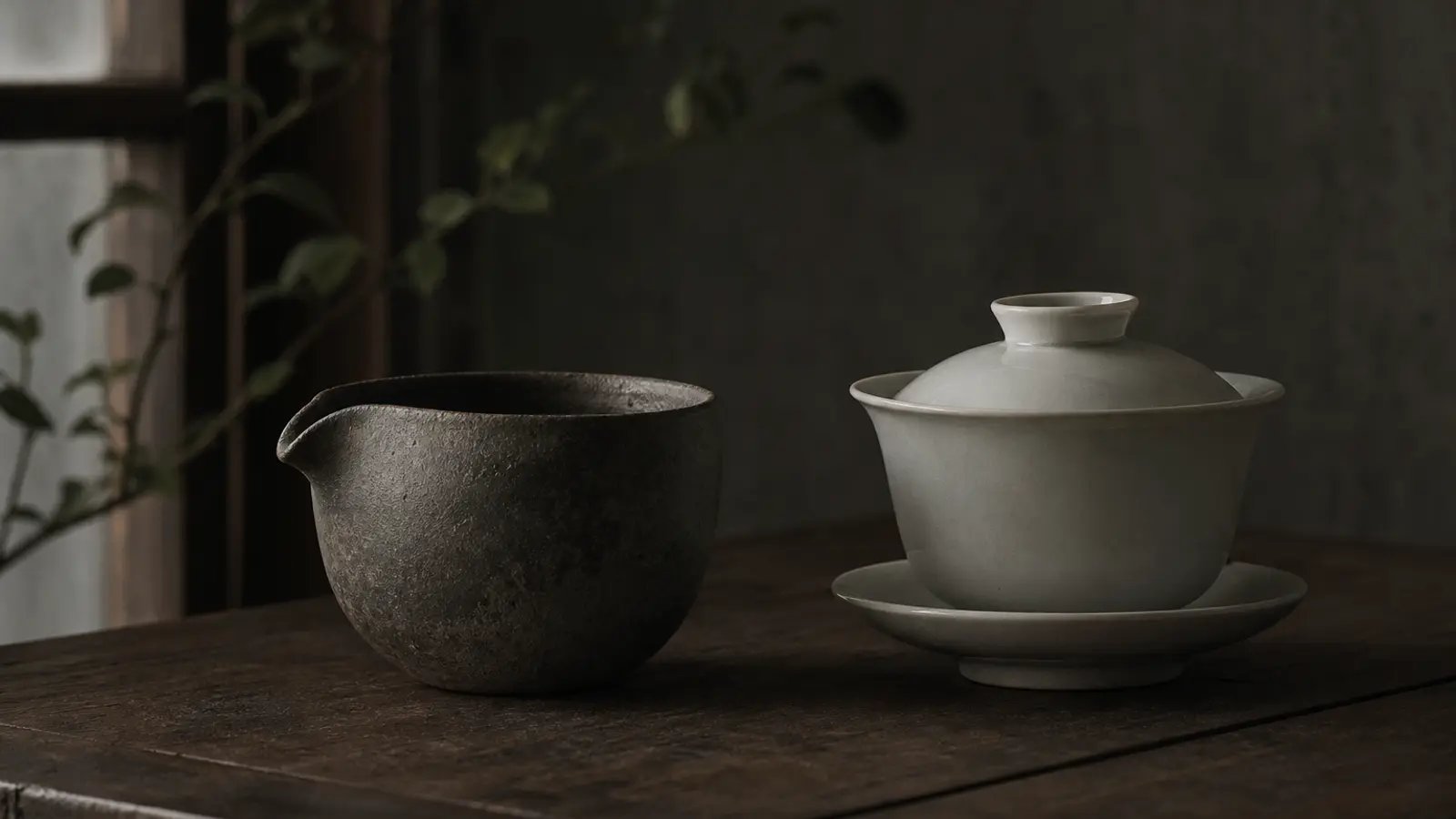
A houhin (宝瓶, Japanese) and a gaiwan (蓋碗, Chinese) are both small brewing vessels designed for concentrated, multi-steep tea preparation — but they differ in material philosophy, form, and the teas they serve best. The houhin vs gaiwan comparison is worth understanding clearly because choosing the wrong vessel for the wrong tea produces mediocre results no matter how good your leaf is.
This article compares them directly: what each does well, where each fails, and which to buy first.
The Core Difference: A Lid Changes Everything
The houhin has no lid. The gaiwan has one. That single design choice cascades into every practical decision about temperature, tea selection, and technique.
A wine parallel makes this concrete. The houhin is like a Burgundy glass — shaped and optimized for a specific category, and genuinely superior within that category. The gaiwan is like a universal ISO tasting glass — it handles everything competently, and for evaluation purposes, it’s the standard. You want the Burgundy glass if you drink a lot of Burgundy. You need the ISO glass if you taste across categories.
The same logic applies here.
Houhin vs Gaiwan Comparison Table
| Feature | Houhin (宝瓶) | Gaiwan (蓋碗) |
|---|---|---|
| Origin | Japan | China |
| Lid | None | Yes — serves as heat control and strainer |
| Typical Capacity | 100–150 ml | 100–120 ml |
| Common Materials | Tokoname clay (常滑焼), Banko clay (萬古焼), porcelain | Porcelain (standard), sometimes clay |
| Temperature Range | 50–80°C (comfortable to handle) | 50–100°C (lid protects fingers) |
| Best For | Gyokuro, high-grade sencha, kabusecha | Everything — pu-erh, oolong, black, green, white, yellow |
| Worst For | Pu-erh, oolong, any tea above 80°C | Nothing (true generalist) |
| Heat Behavior | Sheds heat rapidly; steep stops naturally as water cools | Retains heat with lid on; releases heat with lid cracked |
| Price Range (USD) | $15–$80 (porcelain); $30–$150+ (artisan clay) | $8–$25 (porcelain); $30–$100+ (Jingdezhen handmade) |
The Houhin: A Specialist Tool for Japanese Green Tea
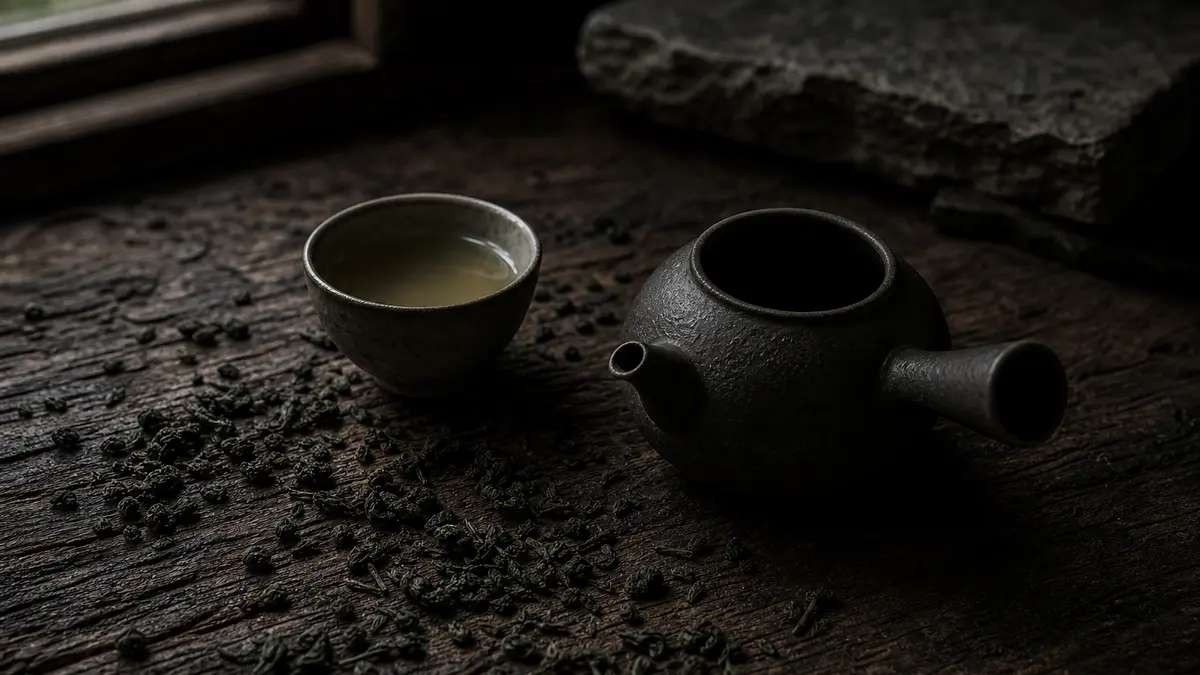
The houhin is a handleless teapot with no lid. It looks like a small pitcher with a built-in strainer at the spout — usually a set of fine clay perforations or a mesh screen. You pour water in from the open top, watch the leaves steep, and decant directly into cups.
Why No Lid Works
Japanese green teas — gyokuro (玉露) in particular — brew at temperatures most people find surprisingly low. Gyokuro calls for water at 50–60°C. High-grade sencha (煎茶) sits around 65–75°C. At these temperatures, you can comfortably grip the rim of a lidless vessel, and the open top gives you a direct window into extraction.
The thin walls of a houhin release heat quickly. This is a feature, not a flaw. Delicate Japanese greens become bitter and astringent when over-extracted, and the natural heat loss from a lidless vessel acts as a brake on extraction. The steep essentially stops itself as the water temperature drops. It’s elegant engineering disguised as simplicity.
Material Matters
Tokoname (常滑) clay is the classic houhin material. It’s a high-iron clay from Aichi Prefecture, usually unglazed, with a distinctive reddish-brown color. Tokoname is said to soften the astringency of green tea — the iron in the clay interacts with tannins in a way that rounds out the cup. Whether the effect is dramatic or subtle depends on the specific clay and tea. I notice a difference in side-by-side sessions, but it’s not transformative.
Banko-yaki (萬古焼) from Mie Prefecture is another common clay, often in purple or gray tones. Porcelain houhins also exist and offer a neutral brewing surface — useful if you want pure, unaltered flavor.
What a Houhin Does Poorly
Anything that needs sustained high heat. Pour 95°C water into a lidless houhin and two things happen: the water cools too fast for the leaves to extract properly, and the rim becomes dangerously hot against bare fingers. There’s no lid to trap steam, no lid to use as a strainer, and no safe way to hold the vessel.
A houhin is the wrong tool for shou pu-erh (熟普洱), sheng pu-erh (生普洱), Wuyi yancha (武夷岩茶), Phoenix dancong (鳳凰單叢), or any black tea brewed at 90°C or above.
The Gaiwan: The Universal Brewer
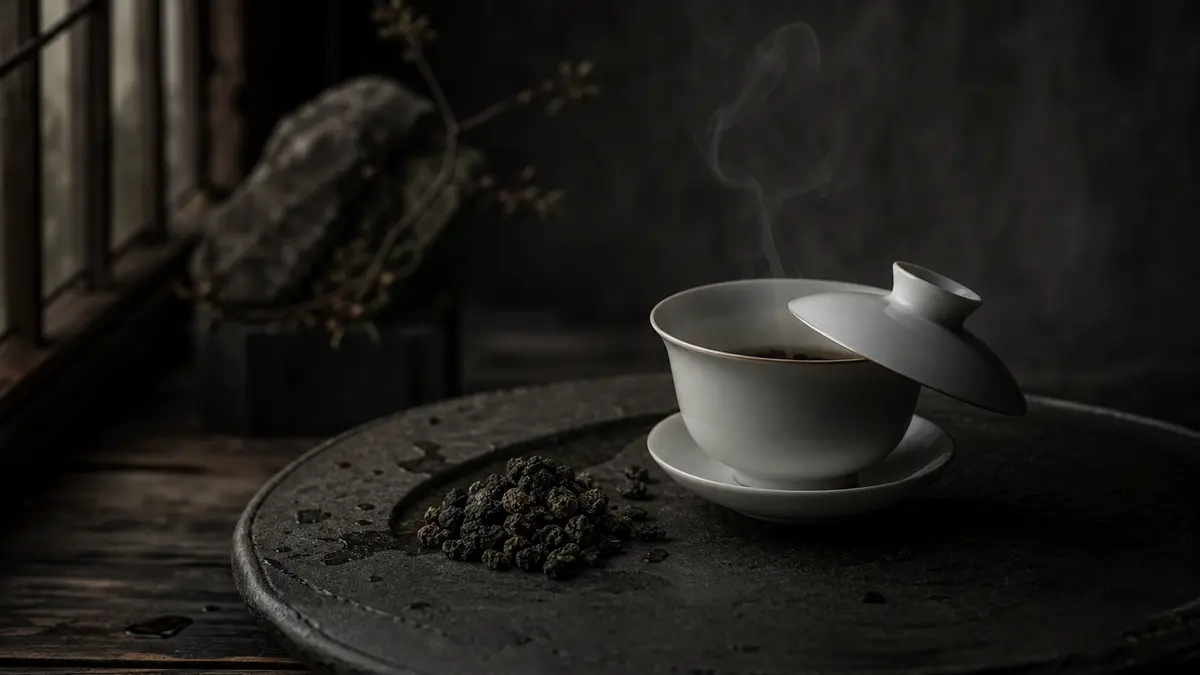
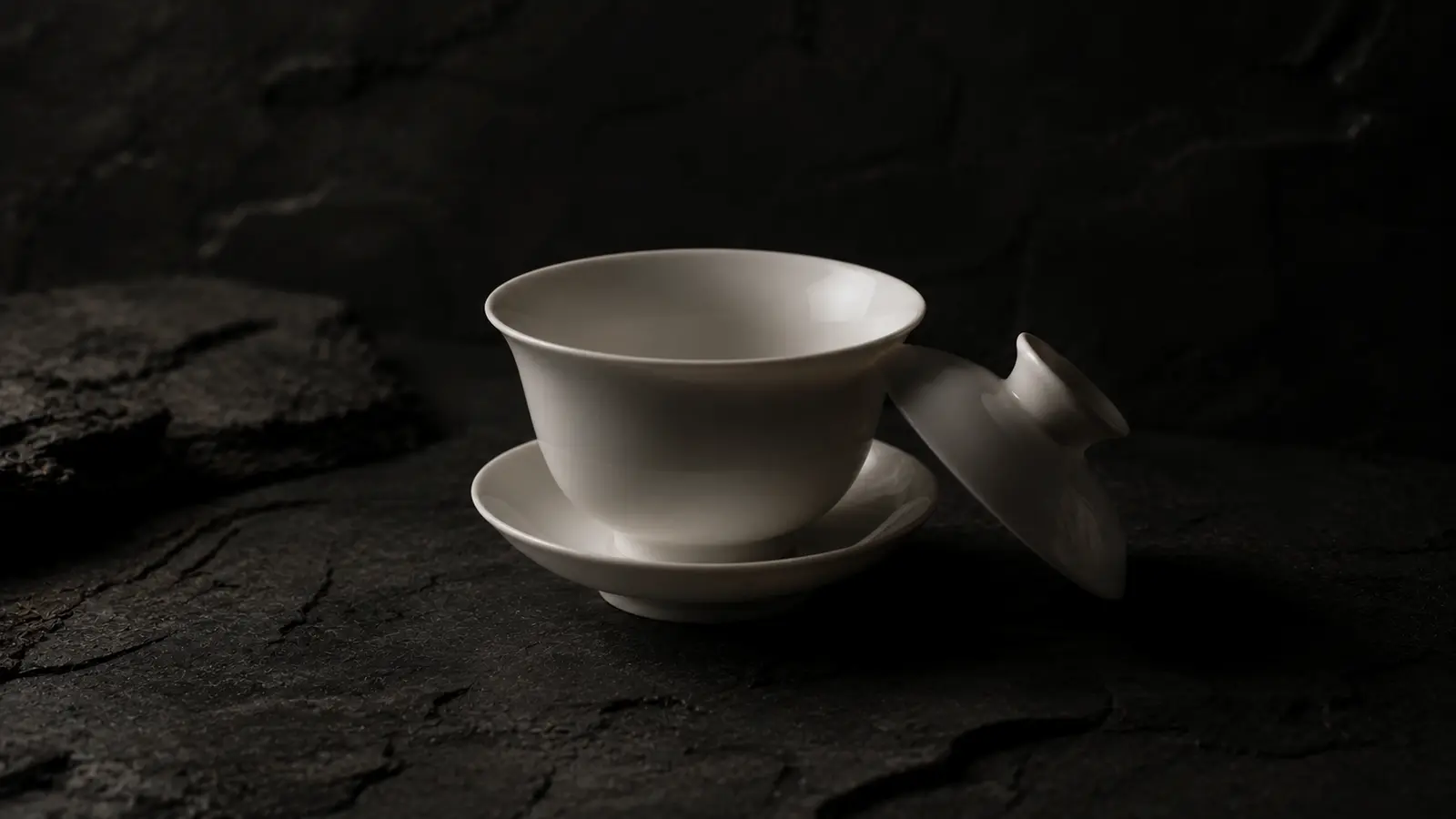
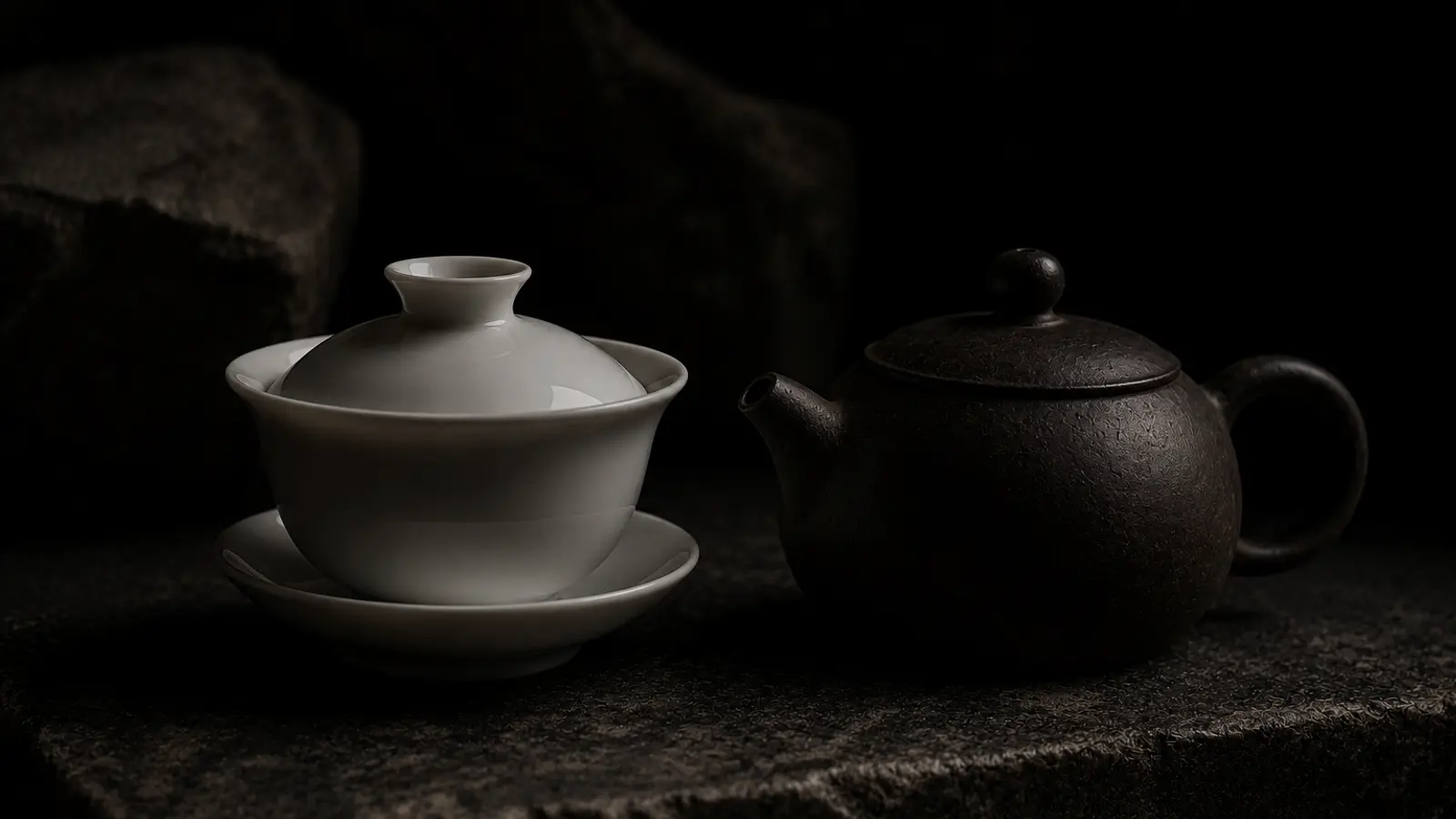
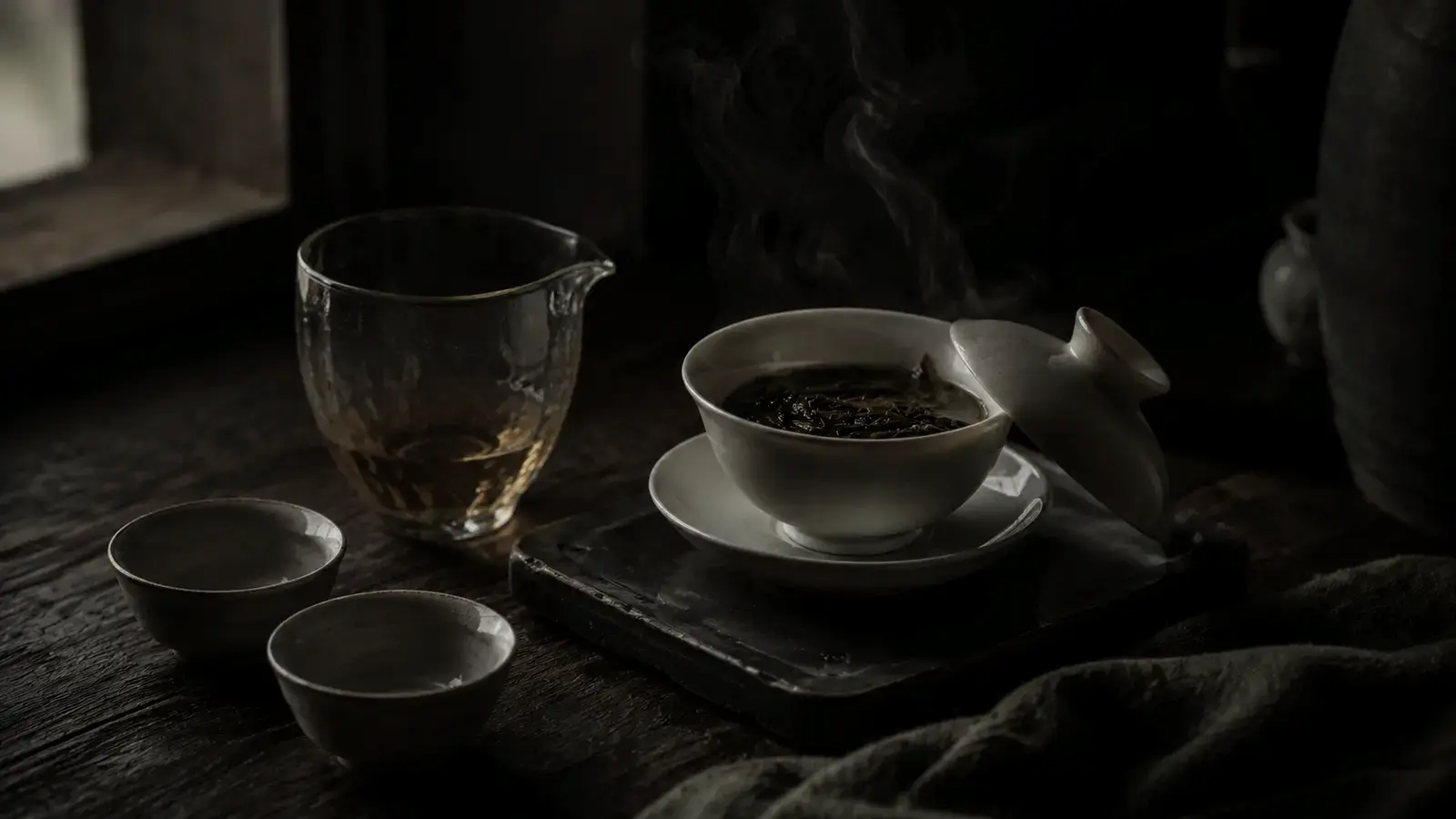
A gaiwan is a lidded bowl — three pieces at its simplest: saucer, bowl, lid. You add leaves, pour water, place the lid, and pour through the gap between lid and bowl. The lid serves as both heat controller and strainer.
Why the Lid Changes the Game
The lid gives you variable temperature control within a single vessel:
- Lid on, tight — maximum heat retention. Water stays at 95°C+ for the 15–30 seconds that pu-erh and roasted oolong need.
- Lid cracked — releases steam and drops temperature faster. Useful for greens and whites where you want to brake extraction.
- Lid off — the gaiwan becomes functionally similar to a houhin. Open-air cooling for delicate teas.
This range means one gaiwan handles every tea type. I use a 100 ml white porcelain gaiwan as the standard vessel for all tasting documentation on Steep Atlas. Not because it’s the most romantic vessel — because it’s neutral, consistent, and doesn’t play favorites.
Material: Porcelain Dominates
White porcelain is the default gaiwan material for good reason. It’s non-porous, doesn’t absorb flavors, and lets you evaluate liquor color against the white interior. Jingdezhen (景德鎮) porcelain is the traditional standard. Glazed clay gaiwans exist — some Yixing (宜興) gaiwans are made for specific tea types — but they’re niche.
Gaiwan Technique Has a Learning Curve
The gaiwan’s one real weakness is ergonomic. You hold it by pinching the lid and rim with your thumb, middle finger, and index finger — and when the water is near boiling, the margin for error is thin. New gaiwan users burn themselves. It’s a rite of passage, not a design flaw, but it’s honest to acknowledge: the first few sessions with 95°C water are tense.
A houhin, by contrast, is intuitive at its intended temperature range. You pick it up, pour, done. There’s almost no technique to learn.
When to Use Which
Choose the Houhin When:
- You’re brewing gyokuro, kabusecha (かぶせ茶), or high-grade sencha
- Water temperature is below 80°C
- You want to watch the leaves unfurl — the open top provides a beautiful view of tightly rolled Japanese greens expanding
- You’re practicing a slower, more meditative Japanese tea preparation
Choose the Gaiwan When:
- You’re brewing pu-erh, oolong, yancha, black tea, white tea, or dark tea (黑茶)
- Water temperature is above 80°C
- You need precise control over heat retention and extraction timing
- You’re tasting or evaluating tea and want a neutral vessel
- You’re brewing anything and want one vessel that handles it all
The Short Answer on Which to Buy First
If you own only one vessel: gaiwan. A 100 ml white porcelain gaiwan covers every tea type from delicate Anji Bai Cha (安吉白茶) at 75°C to aged sheng pu-erh at 100°C. The lid gives you the flexibility to adjust for any leaf.
The houhin is a beautiful addition for dedicated Japanese green tea practice. It is not essential. I’d recommend it as a second or third vessel — after a gaiwan, and possibly after a Yixing teapot if you drink a lot of pu-erh or oolong.
A Note on the “Shiboridashi” Confusion
You’ll sometimes see the word shiboridashi (搾り出し) used interchangeably with houhin. They’re similar but not identical. A shiboridashi is even flatter and wider than a houhin — more plate-like — and typically has no spout filter, just a slight channel at the rim. Both are lidless, both serve Japanese greens, and the practical differences are minor. For this comparison, the key point holds: neither has a lid, and both are specialist vessels for low-temperature teas.
The Steep Atlas Position
A white porcelain gaiwan is the universal standard. Every tasting note on this site uses one. It’s the reference vessel the way a calibrated glass is the reference in wine evaluation — not because it’s the best experience for every tea, but because it’s the consistent baseline.
A houhin earns its place when you drink enough Japanese green tea to justify a dedicated tool. The experience of brewing gyokuro in a fine Tokoname houhin — watching the dark green needles slowly open in 55°C water, the rich umami concentrate that pours out — is genuinely different from doing the same in a gaiwan. The vessel was designed for that exact moment, and it shows.
Own both if your practice spans both traditions. Start with the gaiwan if you’re choosing one.